
Essential Tools Every Graphic Designer Needs
Introduction to Graphic Design
Graphic design is a creative discipline where artistry and technology come together to produce visual content that communicates ideas effectively. Essential Tools Every Graphic Designer Needs This field encompasses everything from branding to digital media, allowing designers to explore innovative ways of storytelling through visuals. Professionals in graphic design harness their artistic abilities and technical expertise to craft designs that leave a lasting impression.
Key Principles of Design
Designers rely on essential principles to guide their work and create visually compelling compositions. Among these principles, hierarchy plays a crucial role in directing the viewer’s attention to the most important elements. By adjusting size, color, or placement, designers can establish a clear order of importance within a layout. Proportion is another key consideration, ensuring that the relationship between elements feels natural and cohesive.Essential Tools Every Graphic Designer Needs Designers often use grids or mathematical ratios to achieve balanced proportions. Additionally, repetition strengthens a design by reinforcing patterns and creating a sense of consistency. This can be especially effective in branding or layouts where unity is vital. Space, or the intentional use of empty areas, allows elements to breathe and makes designs more digestible. Thoughtful spacing can prevent overcrowding and lead to a cleaner aesthetic. Rhythm, which introduces movement or flow, keeps the viewer engaged by encouraging the eye to follow a visual path through the design. Finally, attention to detail, from typography choices to subtle textures, enhances the overall quality of a project. When applied with purpose, these principles ensure that a design resonates with its intended audience while maintaining aesthetic integrity.
Tools and Software
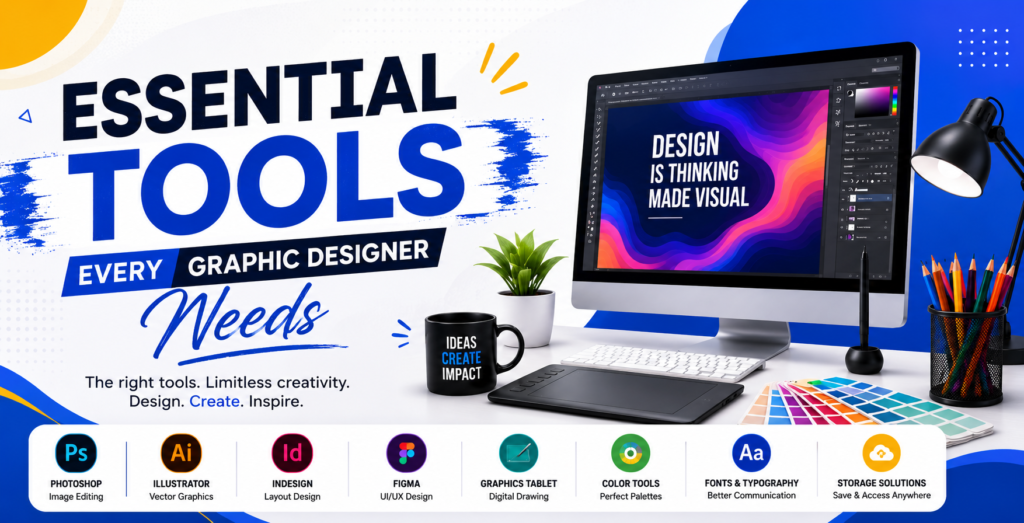
Graphic designers utilize an array of tools and software to transform ideas into visual creations.Essential Tools Every Graphic Designer Needs Adobe Photoshop, a widely used program in the industry, dominates as a key tool for editing images and creating detailed designs. Adobe Photoshop led the graphics software market with a significant market share as of February 2026.
Adobe Illustrator is another essential program, designed specifically for crafting vector-based graphics such as logos, icons, and scalable illustrations. For layout and publication design, Adobe InDesign is the preferred software, offering advanced tools for creating brochures, magazines, and multi-page documents. These programs collectively form a core suite that designers often rely on for diverse project requirements.
Essential Tools Every Graphic Designer Needs Hardware also plays a significant role in the design process. Many designers use digital drawing tablets to create hand-drawn illustrations with greater accuracy and fluidity. Tools like these allow for seamless integration of traditional artistry and modern technology. Additionally, cloud-based tools have gained traction, enabling collaboration and file sharing across teams and projects. The continued evolution of design tools and technology ensures that professionals can keep exploring new creative possibilities and refine their workflows.
Graphic Design Trends
Graphic design continues to evolve as new creative approaches and innovations emerge. One notable trend is the increasing use of bold typography to create eye-catching visuals that prioritize readability and impact. Designers are also exploring dynamic color gradients, using them to add depth and vibrancy to their work. Another growing movement is the integration of 3D elements, allowing for more immersive and engaging visuals across digital and print media.
Sustainability has also become a significant influence, with many designers focusing on eco-conscious practices, such as using recycled materials for print designs or creating visuals that promote environmental awareness.Essential Tools Every Graphic Designer Needs Motion graphics are gaining traction as well, enhancing static designs with animated elements that draw viewers in and keep them engaged.
The adoption of futuristic design aesthetics, featuring neon hues and abstract shapes, has brought a fresh perspective to branding and advertising campaigns. Hand-drawn illustrations are making a comeback, offering a personal, authentic touch to digital and traditional media projects. Experimentation with asymmetry and unconventional layouts has also become more prominent, providing unique compositions that break away from traditional grid systems. These trends demonstrate how the field embraces creativity and innovation to remain both relevant and exciting.
Building a Portfolio
When assembling a portfolio, prioritize quality over quantity by selecting only your strongest and most relevant work. Each piece should reflect your design skills, creative thinking, and technical expertise.Essential Tools Every Graphic Designer Needs Highlight a variety of project types to demonstrate your versatility and ability to tackle different challenges. Include details about your role in each project and the tools you used to bring your ideas to life, as this helps potential clients or employers understand your process.
Organize your portfolio thoughtfully, grouping similar projects together or arranging them chronologically to show progression in your skills. Ensure that your portfolio is visually appealing and easy to navigate, with clean layouts that allow the work to take center stage. Whether presenting your portfolio online or in print, use high-resolution images and professional formatting to convey attention to detail.
For digital portfolios, consider creating an interactive experience with features like clickable thumbnails or embedded animations to showcase dynamic projects. Tailor your portfolio to align with your career goals or target audience, focusing on industries or roles you aim to work in. By curating a purposeful selection of work and presenting it effectively, you can make a strong impression and communicate your design capabilities with confidence.
Career Opportunities in Graphic Design
Graphic design offers diverse career paths that cater to a range of interests and Essential Tools Every Graphic Designer Needs expertise. Roles such as brand designers focus on creating cohesive visual identities that communicate a company’s values, while web designers specialize in crafting engaging, user-friendly websites. UX/UI designers play a critical role in enhancing the user experience by designing intuitive interfaces for apps and digital platforms. Illustrators bring creativity to life through hand-drawn or digital art, often contributing to marketing campaigns, editorial content, and product packaging.
In addition to creative roles, some designers pursue careers in fields like motion graphics, where animated visuals are developed for advertising, entertainment, and digital media. Print-focused designers may work on projects such as magazines, posters, or packaging, combining technical skills with artistic vision to deliver impactful designs.
Freelancing offers another viable path, providing flexibility to work across industries or specialize in a particular niche. With the increasing demand for visually driven content, graphic design professionals have numerous opportunities to apply their skills, grow their expertise, and make meaningful contributions to various industries.
illustration
Illustration plays an integral role in graphic design, bringing unique concepts to life through visuals that can communicate complex ideas effectively. Essential Tools Every Graphic Designer Needs Whether created digitally or through traditional mediums, illustrations add personality and originality to design projects. In graphic design, illustrations are often used to enhance storytelling, making content more engaging and relatable for the audience. They can be tailored to fit a brand’s tone, whether it’s playful, professional, or somewhere in between.Essential Tools Every Graphic Designer Needs
Custom illustrations are particularly valuable because they provide a distinctive touch that stock images or pre-made graphics cannot replicate. Designers often use them in branding, advertising, editorial layouts, and social media Essential Tools Every Graphic Designer Needs content to create a cohesive and memorable visual language. By incorporating hand-drawn elements, vector art, or digital painting techniques, illustrations can make designs feel more authentic and approachable.
Advancements in digital tools have made it easier than ever for designers to experiment with different styles and techniques. From minimalist line art to detailed, textured drawings, the possibilities are endless. Combining illustration with other design elements, such as typography or Essential Tools Every Graphic Designer Needs photography, can result in striking compositions that capture attention. Ultimately, illustration allows designers to push creative boundaries and craft visuals that leave a lasting impact.